Crypto Proof of Funds for Real Estate

How buyers document crypto-backed buying power

A proof of funds letter shows that a buyer has sufficient assets to complete a real estate purchase. In a crypto-funded transaction, the concept is the same, but the assets being verified are digital.

This page explains how crypto proof of funds works, how wallet verification is handled, and how buyers use digital assets to present as credible cash buyers in real estate transactions.

  • A proof of funds letter establishes transaction-ready buying power.
  • Crypto assets can be verified even when not held in a bank.
  • Most closings still settle in fiat rather than crypto.
  • Strong documentation helps crypto buyers compete like cash buyers.
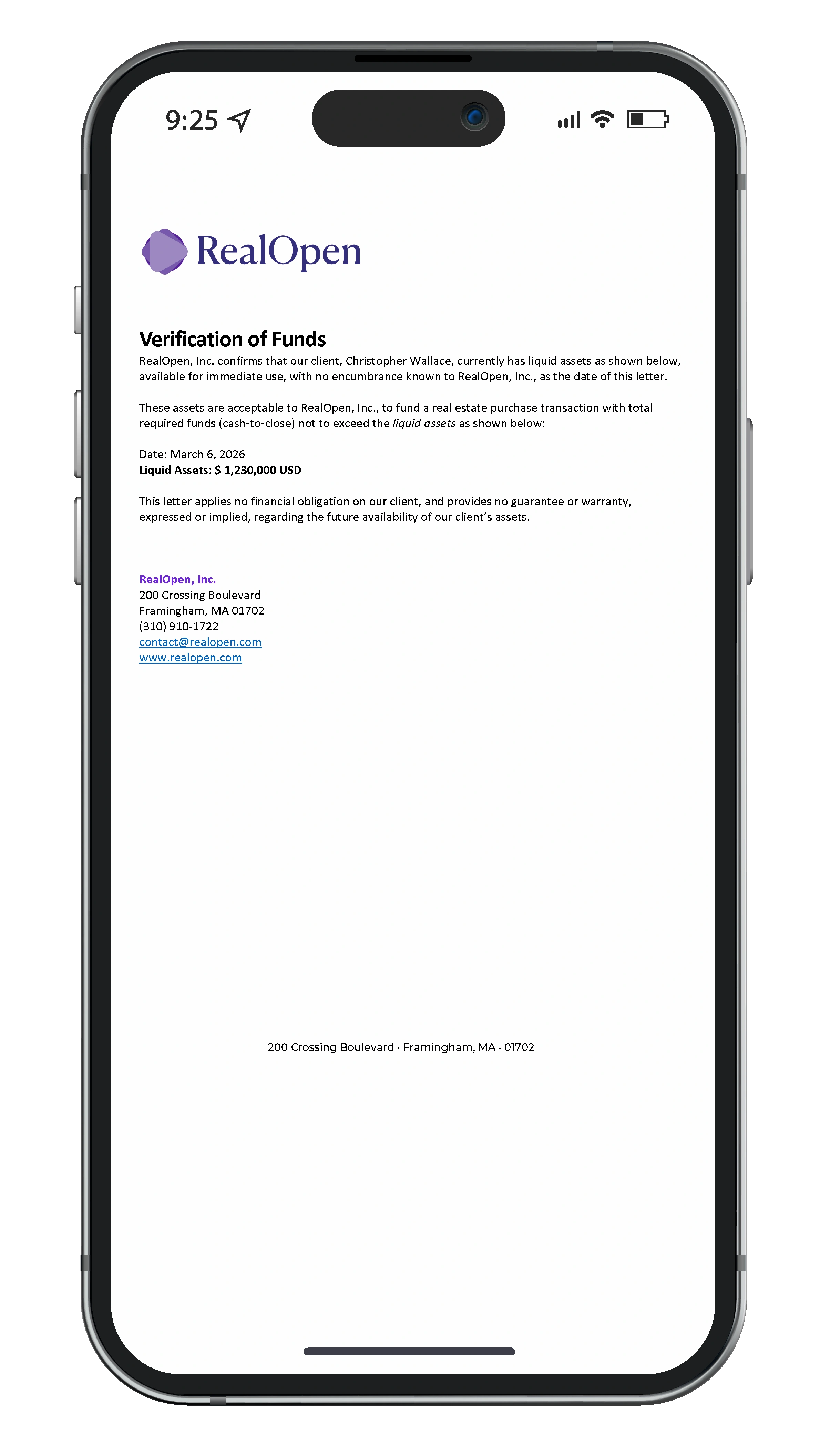
Example Document

Example RealOpen proof of funds letter verifying crypto-backed assets for a real estate purchase

Example RealOpen Proof of Funds letter used to verify
a buyer's crypto-backed purchasing power.

What a Proof of Funds Letter Does

Real-world example and core fields

A proof of funds letter supports an offer by documenting that the buyer has sufficient liquid assets. It strengthens buyer credibility and helps listing agents and sellers evaluate closing certainty.

Below is an example of what a crypto proof of funds letter can look like when prepared for a real estate transaction.

  • Verified buyer identity and compliance status.
  • Estimated available buying power for the transaction.
  • Confirmation of asset type and verification method.
  • Issue date and reference details for offer review.

Why Crypto Proof of Funds Is Different

Digital asset verification requirements

Traditional proof of funds usually comes from banks or brokerages. Crypto assets may sit in self-custody wallets, multisig setups, cold storage, or centralized exchange accounts.

The practical challenge is presenting digital wealth in a format the real estate world trusts.

  • Does the buyer control the wallet or account?
  • Are there sufficient assets for the purchase?
  • Is there a credible path to closing funds?

How Crypto Proof of Funds Works

From verification to offer readiness
  • Identity verification
  • Wallet or account verification
  • Balance confirmation
  • Proof-of-funds documentation
  • Use in offer and negotiation

The end goal is simple: convert technical asset evidence into transaction-ready documentation.

For broader transaction context, see how to buy real estate with crypto and closing with crypto.

Verifying Crypto Assets for Real Estate

Crypto Proof of Funds vs a Wallet Screenshot

This comparison reflects how each format is typically interpreted in real estate workflows.

TypeWhat it showsPrimary limitation
Wallet screenshot
Apparent crypto balance at one point in time
Does not reliably prove control or closing readiness
Exchange screenshot
Apparent exchange holdings
Does not prove withdrawal readiness or funding path
Crypto proof of funds letter
Verified buyer, verified assets, documented buying power
Does not guarantee the buyer will fund the closing

In real estate, proof of funds is not just about showing assets. It is about showing transaction-ready buying power in a format the other side can trust.

What Sellers and Agents Actually Care About

Signals of closing certainty

In most transactions, counterparties focus on practical certainty.

  • Is the buyer real and verified?
  • Do they actually have sufficient funds?
  • Can they close on time?
  • Will the contract require unusual terms?
  • Will escrow receive normal settlement funds?

What Listing Agents Usually Expect to See

Listing agents reviewing crypto-funded offers typically want the same signals they expect from any cash buyer.

  • Verified buyer identity and compliance status
  • Documented asset amount sufficient for the purchase
  • Confirmation of wallet ownership or account control
  • A clear statement that assets are available for the transaction
  • Contact details for verification

Effective proof of funds demonstrates transaction-ready buying power rather than proving technical blockchain details.

What a Strong Proof of Funds Package Should Communicate

What listing agents expect to see
  • The buyer is verified.
  • The buyer controls the relevant assets.
  • The amount is sufficient for the transaction.
  • There is a realistic path to closing funds.

In transactions involving lending, reserve validation may overlap with topics like crypto down payments.

When Proof of Funds Is Requested

  • Before submitting an offer on a property
  • During seller review of competing offers
  • Before escrow funding or closing confirmation in some transactions

In the broader process of buying real estate with crypto, proof of funds supports offer readiness first, while the crypto funding process becomes critical once the deal is ready to settle.

How RealOpen Handles Crypto Proof of Funds

Verification and documentation workflow

RealOpen helps buyers verify crypto holdings and generate proof-of-funds documentation designed for practical real estate workflows. This allows buyers to present as credible cash buyers while sellers and escrow continue operating through familiar fiat-settlement processes.

RealOpen converts verified crypto holdings into documentation that sellers, agents, and escrow professionals can evaluate like traditional proof of funds.

See how RealOpen works and how crypto is converted and wired for closing for implementation detail.

Frequently asked questions